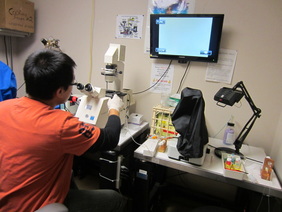
Wei put in many, many, many hours this year on various microscopes to characterize the types of microbes living in our lakes.
Wei working in one of the two microscopy suites in Crary Labs. This microscope is called an Inverted Microscope. Wei can put thicker slides or sample holders in this microscope because the lenses are underneath the sample, rather than over the sample (like most compound microscopes the people are probably familiar with.
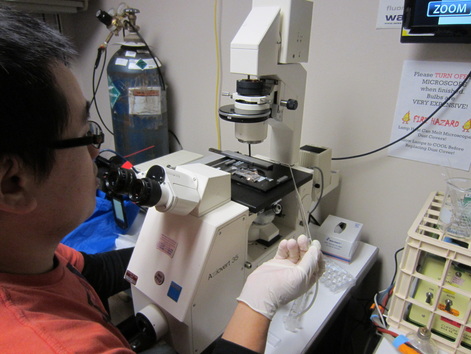
Wei uses a modified glass pipette to pick up single cells from under the microscope. Not an easy task! The cells are 5 to 20 micro-meters in size and Wei's pipette is more than 100 micro-meters in diameter, which is still pretty small, but gigantic compared to his cells!
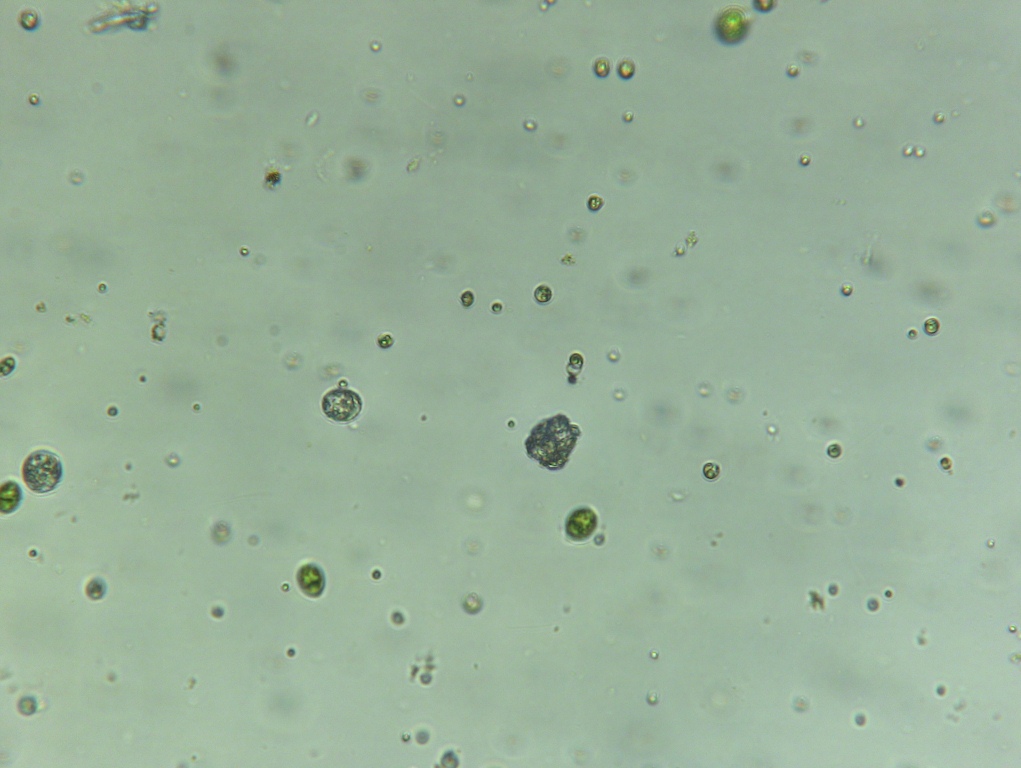
Plenty of Interesting Microbes for Team Protist!
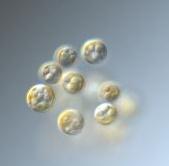
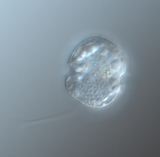
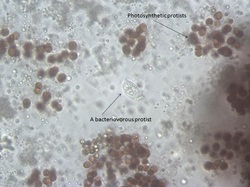
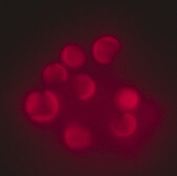
A cluster of protist cells from Lake Bonney water. The bottom image was taken under epifluorescence microscropy. The red colour comes from chlorophyll fluorescence, indicating that the cells are photosynthetic.
Wei's favorite Beasty. We don't know what this is yet, but we think it's a dinoflagellate.
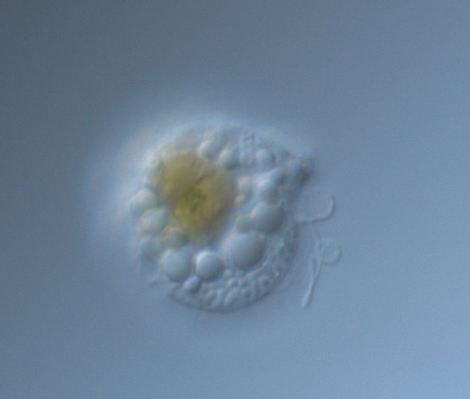
Another mystery microbe. This one is probably in the procces of digesting another photosynthetic protist
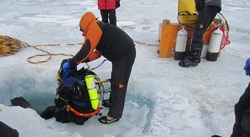
Multiple science groups are working in the dry valleys on their respective projects at any given time during the season. We had a great time this season working and living in the dry valley camps with the other scientists. Unfortunately, we weren’t able to photo document all the other science happening, so we will just mention a couple of the projects here.
At Lake Fryxell we spent time with a group of New Zealand scientists (here's their blog: http://cyanobacterialadventures.blogspot.com/) who studied microorganisms growing on the bottom of the lake. Because of the formation that these organisms grow in, they are referred to as “mats”. How do you collect mat samples growing on the bottom of an ice-covered lake? …dive in!
Tyler, the diver, emerges from the Lake Fryxell dive hole.
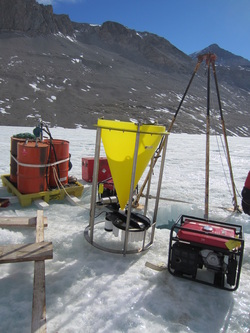
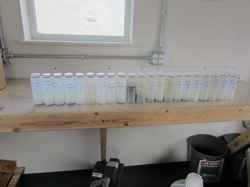
We stayed at Lake Bonney camp with multiple scientists working on the dry valley Long Term Ecological Research (LTER) teams. LTER teams study various aspects of lake chemistry, geology, and stream inputs. Every other year one of the LTER teams pulls up a sediment trap which sits at the bottom of the lake and allows for the collection of sediments falling through the water column. The sediment trap is essentially a funnel with the bottom in line with sample bottles. The sample bottles are rotated at pre-determined times over two years so that scientists can observe sediment accumulation on a seasonal basis. Here are the sample bottles removed from the sediment trap.
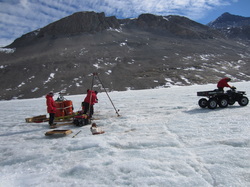
The instrument is large and heavy (and expensive!) so the team carefully pulled it out of the lake using an ATV. It was really something to see!
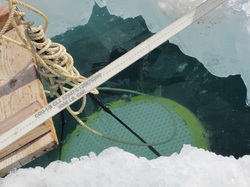
Sediment trap surfacing.
Team Protist finished field work this past week. Leaving the dry valley field sites is bittersweet. It is a good feeling to know that the field season was successful and that you’re closer to getting home, but it is sad to leave such a beautiful place and friends that are still working in the field.
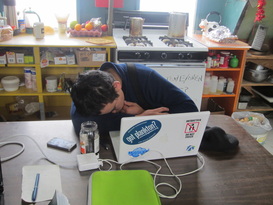
Wei, tired from the field season, naps at Bonney camp.
We didn’t have much time to savor the last hours at Bonney camp as bad weather heading towards McMurdo forced helicopter pick-ups to occur much earlier than scheduled. It is surprising how different the weather can be between the dry valleys and McMurdo and how fast the weather can change on this continent.
Rachael and Jenna stopped at Lake Fryxell for one last round of sampling before heading back to McMurdo. We finished without a minute to spare. As we drove across the lake on the ATV the helicopter was landing on shore. The helicopter flew through some very low visibility areas on the way back and the pilot wasn’t sure if we would be able to land in McMurdo due to the poor weather conditions. After a few tense moments the landing pad in McMurdo became visible and the pilot landed without any issues. Whew!
While the weather was beautiful at Lake Fryxell, snowy conditions occurred in McMurdo.
This week the team will do a lot of unpacking and finish up some experiments in McMurdo before heading back to the states.
Team Protist flew back to McMurdo to conduct a week-long growth incubation experiment (and also for showers and clean laundry!). The team collected lake water samples from Lake Bonney and enriched the samples with nutrients (nitrogen and phosphorus) to investigate the impact of nutrient addition on microbial growth. This experiment is of interest to us because Lake Bonney is naturally low in nutrients, but nutrient inputs into the lake are predicted to increase with climate warming.
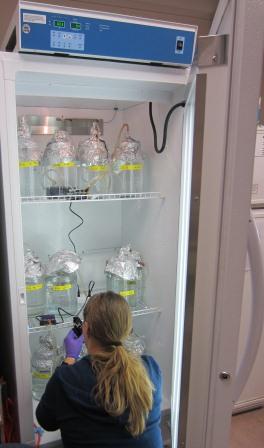
Amber set up the experiment in a low temperature incubator with light levels similar to what the microorganisms experience in their natural habitat. After adding the nutrients, samples were taken every day to track changes in the relative abundance of photosynthetic microbes.
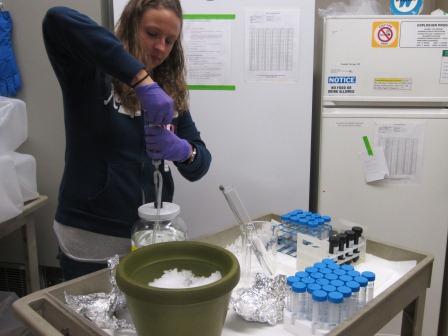
Additionally, Wei analyzed samples using microscopic techniques to determine if the microbes had altered their feeding capabilities when grown in nutrient rich conditions. For example, are microbes acquiring carbon (food source) through photosynthesis or ingestion of smaller microbes.
The results of this experiment will be analyzed back in the U.S. lab. In the meantime, Team Protist will head back out to the field to complete lake water sampling for the 2012 field season.
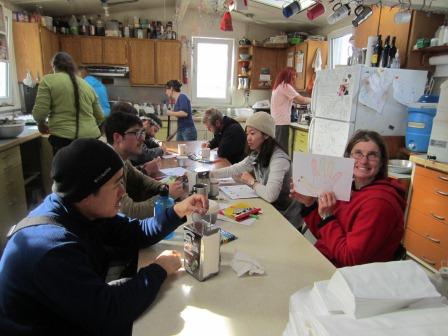
Multiple science groups who work in the dry valleys gathered together at Lake Hoare camp to celebrate Thanksgiving.
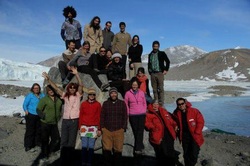
Thanksgiving day revelers pose for a picture outside of Lake Hoare camp.
Team Protist took a helicopter to Lake Hoare and arrived early enough to explore the camp, help prepare a fresh salad, and create hand turkeys before dinner.
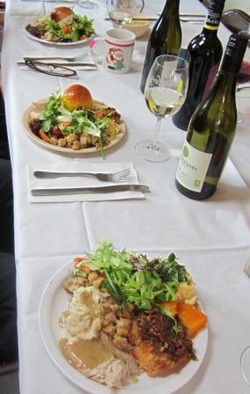
The camp managers at Lake Hoare served up a delicious dinner of turkey, mashed potatoes and gravy, rolls, cranberries, sweet potatoes, salad, root vegetables, and stuffing. The fresh vegetables were especially tasty after spending two weeks in the field where access to fresh fruit and veggies is minimal.
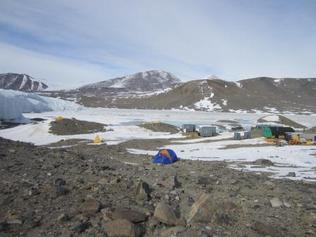
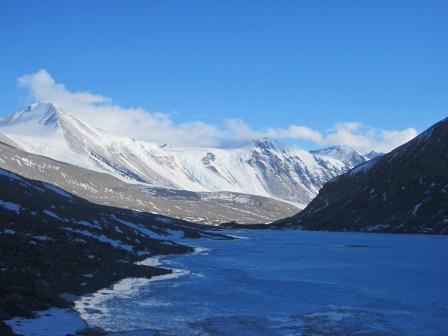
After a great meal and conversation, Team Protist hiked back to Bonney Camp. Despite some reluctance to hike on a full stomach, the great down valley view made the trip well worth it. Glaciers seemed to tumble between every mountain peak in the valley.
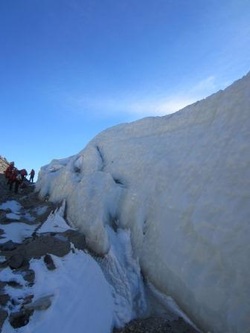
The route back to Bonney lead us right alongside the Suess Glacier. The dry valley Thanksgiving experience is unlike any other!
So we’ve mentioned Team Protist in our blogs, but what do we actually do in Antarctica and why are we here? We work in Antarctica because our research laboratory is interested in how life survives extreme conditions, in particular, the coldest temperatures that life can not only survive but thrive and reproduce (See Kenall’s blog on psychrophiles to learn more about “cold loving” lifeforms)! We also are specifically interested in a special groups of lifeforms called Protists (hence our team name). Protists are microorganisms, but they are different from bacteria in that their cell structure is similar to plants and animals. That is to say: there are plant-like protists (called algae) and animal-like protists (called protozoa). We are interested in both kinds of protists and are trying to figure out when it is an advantage to be a photosynthetic (plant-like) protist or a predatory (animal-like) protist. We have already isolated several of these different kinds of microorganisms and we grow them in our laboratory, but we also want to study these fascinating lifeforms in their natural environment.
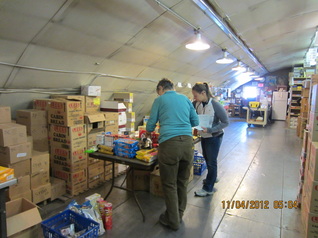
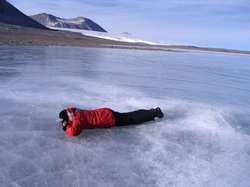
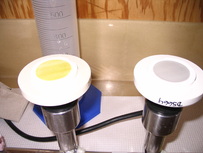
The lake ice prevents >99% of the sunlight from reaching the microbes living beneath the ice.
We study protists in ice-covered lakes in Antarctica for a few important reasons. First, the only lifeforms in our lakes are microbes (!!), so the “animal-protists” that eat bacteria and other smaller protists are the top predators in the food web…. And the “plant-protists” are at the bottom of the food web, making the food for the rest of the microbes living in our lakes. Second, our microbes live under many extreme conditions, not just low temperatures – they also have to live with very little light and extremely limited nutrient supply year round. We work on three different Antarctic lakes because they have different combinations of these extremes in temperature, light and nutrients, and therefore have different proportions of pSo, we’re also interested in what effect these other extremes have on our favorite bugs.
Lake Fryxell has extremely low light available for photosynthesis and has special photosynthetic microorganisms that prefer to live in oxygen-free environments
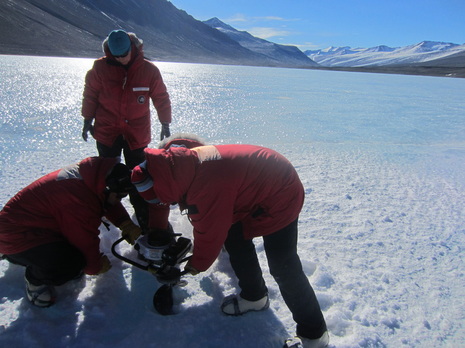
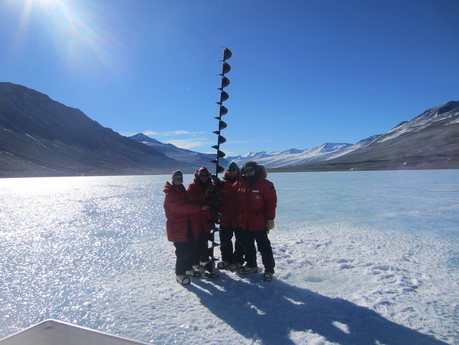
Lake Vanda is unlike any of our other sample sites as there is no permanent camp or sample hut there. Because of this, our stay at Vanda lasts just one day and we do all of our ice drilling, water sampling, and instrument casts in that time. This year we had a member of the science support staff join us at Lake Vanda. This is referred to as a “morale trip” for the staff member and allows them a chance to see parts of the continent that they may not experience otherwise and it is helpful for the scientists to have an extra pair of hands! Here’s our Lake Vanda team drilling a 10 inch sampling hole through the ice cover.
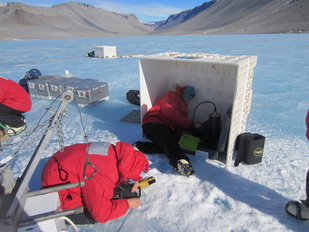
Rachael prepares one of the instruments, called a fluoroprobe, to be cast down through the water. We stayed relatively warm by using one of our helicopter boxes as a wind block.
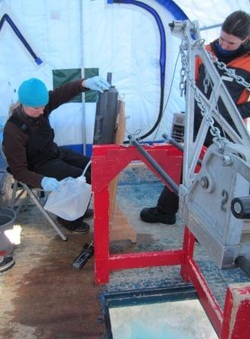
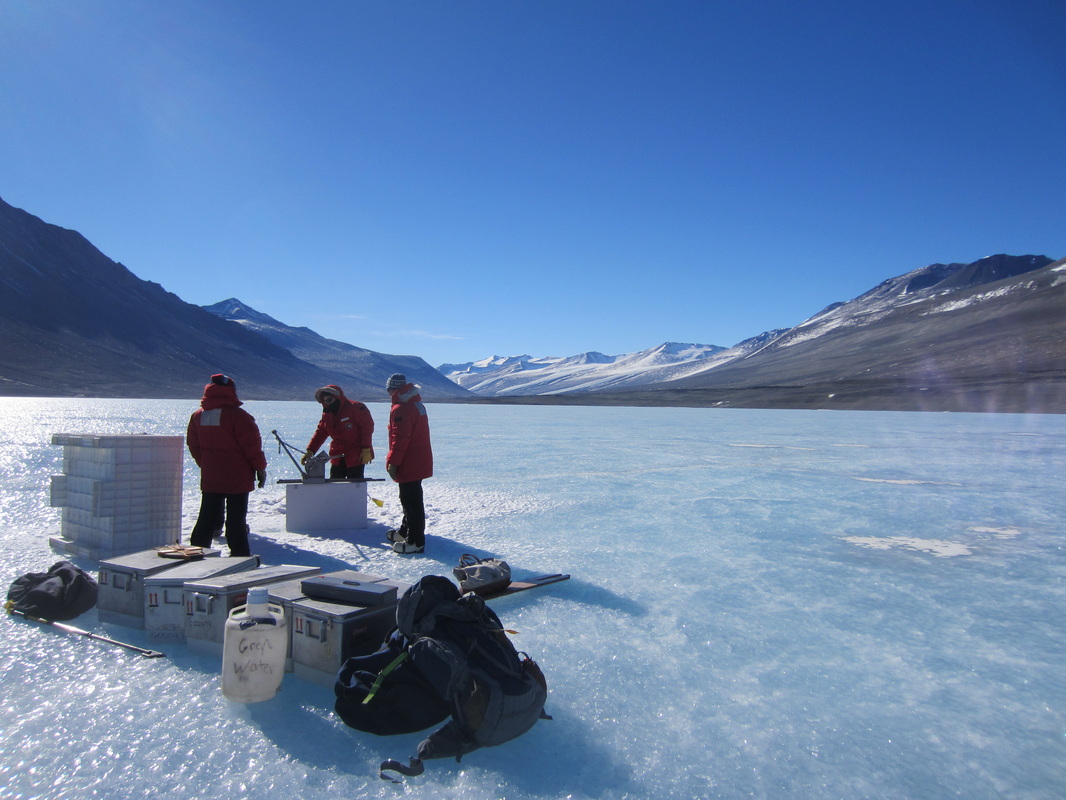
Most of our time at the lake is spent sampling water. Here the team prepares the winch cable where we will attach our Niskin sampler. It is interesting to sample water without a sample hut. Many times the connections on the Niskin sampler will freeze shut. We have multiple methods to deal with frozen sampling equipment including warming items inside of our jackets or use of a hammer. :)
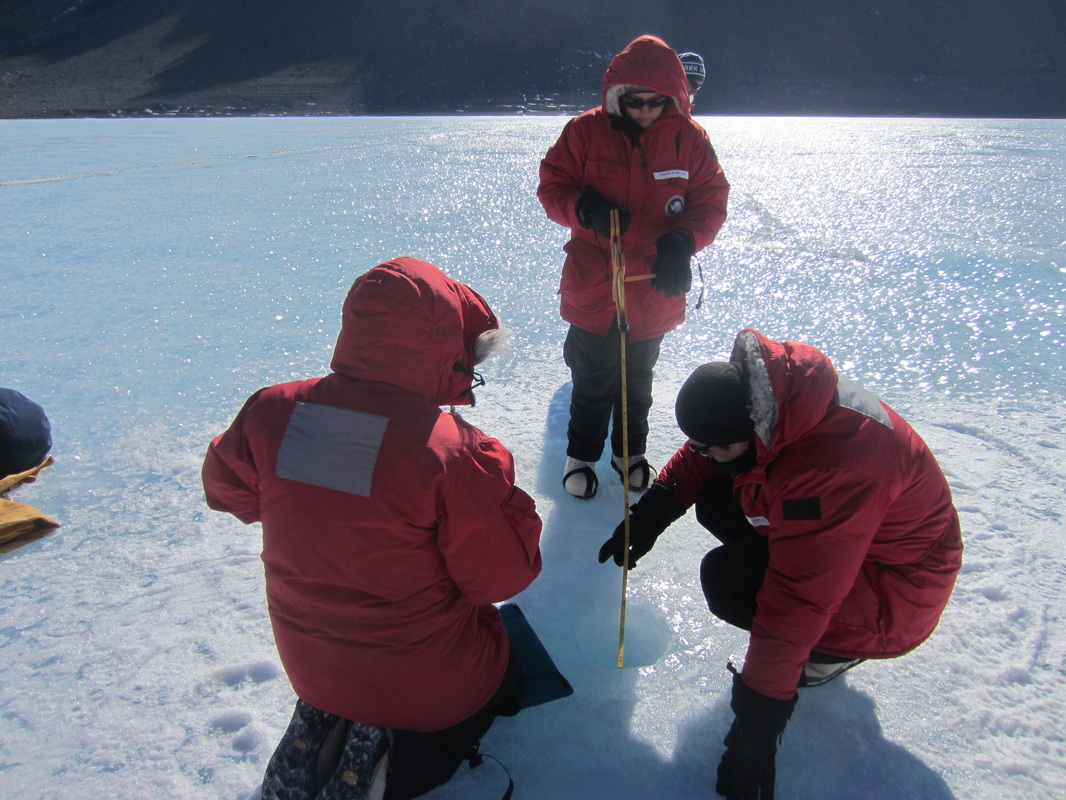
We also measure lake water depth and ice thickness at our sample site.
Lastly, Wei hooks up the helicopter boxes packed with our sampling gear to head back to the main camp at Lake Bonney.
Upon our return to Lake Bonney we filtered the lake water through different types of filters which we will ship back to the U.S. lab for further experiments.
Team protist headed out the field to our first sampling lake, Lake Fryxell. During the season, we will samples four ice-covered lakes: Fryxell, East Bonney, West Bonney, and Vanda. We have permanent camps on the shores of Fryxell and Bonney, and will take a day trip to Lake Vanda (for more information see Megan Sharett's blog on Ice-covered lakes, and compare with the subglacial lake, Lake Vostoc, by Alex Lachapelle)
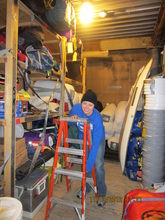
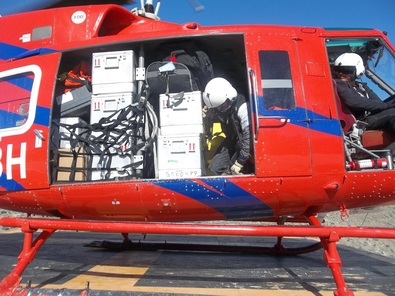
Our internal gear for the field: personal gear, sampling coolers, instruments, even a 20 L liquid nitrogen dewar for preserving samples for molecular biology. On large helicopters, a helo technician helps us load gear.
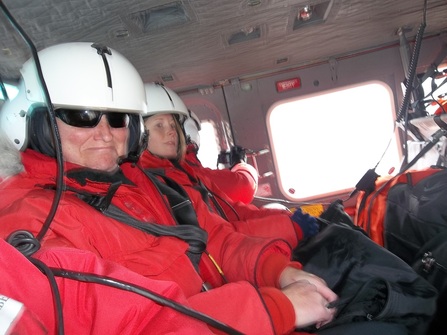
Whew! Just enough room for the scientists!
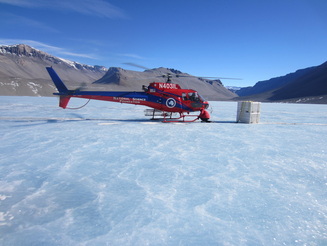
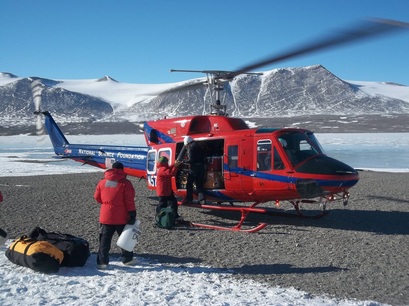
A "hot unload" on the shores of Lake Fryxell. The pilots prefer not to shut down the helicopters when we're loading and unloading gear.
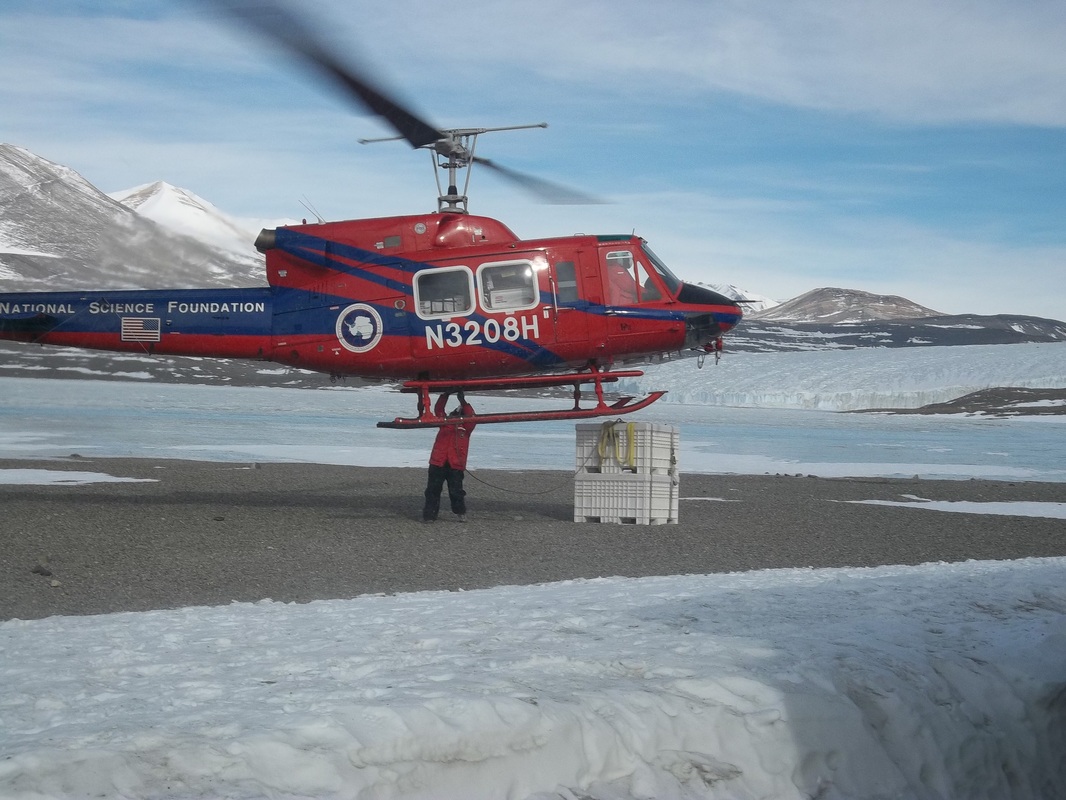
Much of our field gear can be shipped in white helo boxes. Dr. Morgan-Kiss hooks our helo box line to a hovering 212 helicopter.
Team Protist spent about ten days in town ("Mac-Town") getting ready for field work in the McMurdo Dry Valleys. This included alot of training courses and organizing and packing camping gear, food, mechanical equipment, and of course our science equipment.
Wei and Amber organize our camp food.
Amber sorts out our camping gear at the Byrd Field Center.
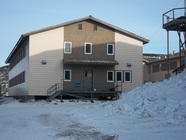
Our sleeping quarters in town.
Welcome to the Morgan-Kiss Field Team 2012 blog. Sorry for the delay in posting: we had a delay with a member of our team and a medical emergency in McMurdo Station, so we were quite busy when we arrived in Antarctica. Our field team this year is four of us: Rachael Morgan-Kiss (Supervisor), Jenna Dolhi (Old Antarctic Scientist), and Amber Siebenaler and Wei Li (Findgees or the new guys). Please also check out the blog postings from Dr. Morgan-Kiss' honors class!
We arrived in McMurdo Station on October 29th. We spent 11 days in town. This time was used for training and organizing our field gear and science equipment. Amber and Wei went to a 2 day Happy Camper school on the sea ice to train for field camping and survival.
Jenna gets her gear checked in at the USAP station in Christchurch, New Zealand.
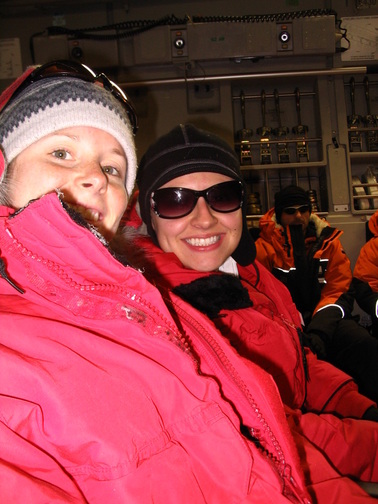
Jenna and Amber on the C-17 cargo plane. Antarctica, here we come !!
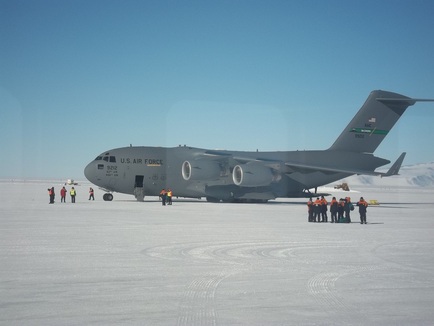
The ice-runway in McMurdo Station, Antarctica (see Justin Wood's blog on the three US Antarctic stations!)
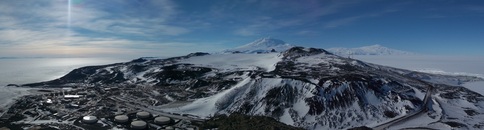
McMurdo Station
|